
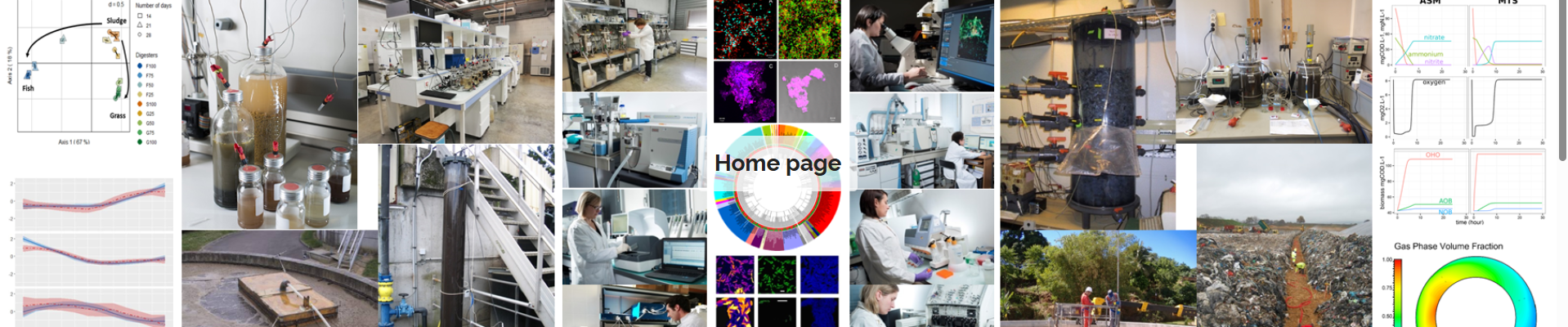
Bioprocesses (such as wastewater treatment plants, waste methanizers, etc.) enable the intensification of natural microbial processes involved in the recycling of organic matter.
The need to optimize the quality of the effluent released into the natural environment has led to the development of engineering approaches for the treatment of carbon, nitrogen, and phosphorus.
Today, these treatment systems face new challenges, such as the need for energy and material recovery from waste (the concept of organic waste biorefinery), while also integrating new environmental requirements — including greenhouse gas management and the consideration of emerging contaminants.
These advances now rely on a more detailed understanding of the processes and microbial populations responsible for these transformations.
The need to optimize the quality of the effluent released into the natural environment has led to the development of engineering approaches for the treatment of carbon, nitrogen, and phosphorus.
Today, these treatment systems face new challenges, such as the need for energy and material recovery from waste (the concept of organic waste biorefinery), while also integrating new environmental requirements — including greenhouse gas management and the consideration of emerging contaminants.
These advances now rely on a more detailed understanding of the processes and microbial populations responsible for these transformations.
Modalités:
ECTS:
Type:
Complexité:
Condition d'accès:
Année: 25/26